
Beyond Sameness: What Managing Diverse Teams Asks of Leaders Today
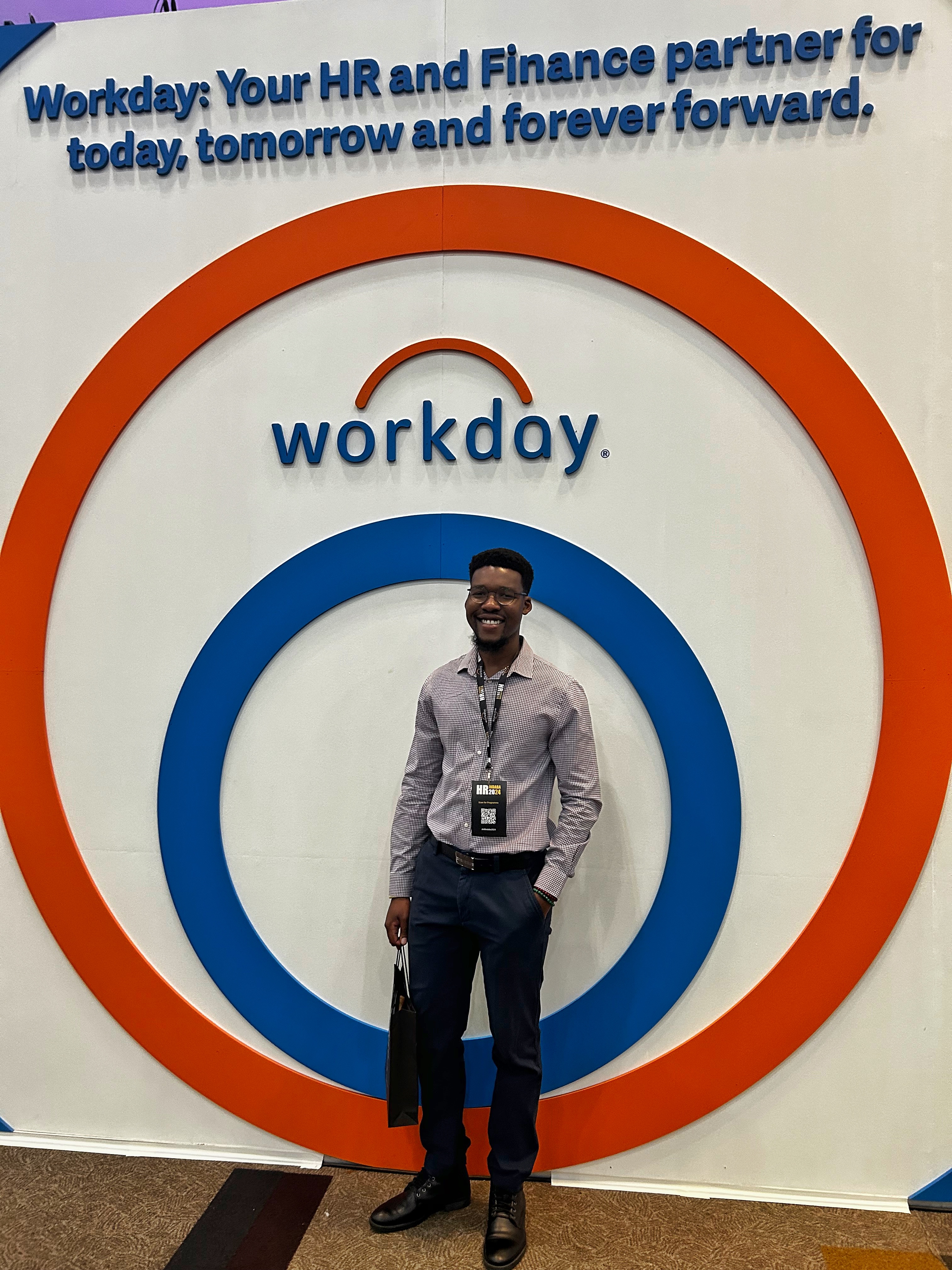

The moment before the meeting starts
Despite it having been weeks ago, I’m sure many of you can recount the feeling. It was the last week of April. Freedom Day was on everyone’s mind, at least in the background. You were preparing for a team check-in and somewhere in the lead-up, a thought crossed your mind: should I say something about it? Acknowledge what the day means?
Then the doubt set in. You weren’t not sure how to hold it. Your team is a mix of people, different backgrounds, different relationships to that history. Some grew up in the years just before 1994, carrying a direct memory of what changed and what cost. Others were born into the country’s democratic era and know apartheid primarily through school syllabuses and family stories. One colleague came from outside South Africa entirely. You do not know what Freedom Day carries for each of them.
So you said nothing. The meeting started. The work happened. The day passed.
That decision, to stay quiet, to keep things professional, to avoid making it “political”, was itself a kind of statement. Silence in a diverse team is never truly neutral. It defaults to whatever the dominant culture has decided is normal. And in South African workplaces, that default has a long and well-documented history.
This article is not about what you should have done leading up to Freedom Day. It is about what the historic days like these prompt, quietly, for anyone leading a team across differences in this country. And what culturally intelligent leadership actually asks of you in practice.
What the data says about the room you’re standing in

Thirty-one years into democracy, South Africa’s workplaces still carry the weight of its past in visible ways. The most recent data from the 24th Commission for Employment Equity Annual Report (2023–2024) shows that 62.1% of top management roles in the country are occupied by white individuals, a group that makes up just 7.7% of the economically active population. That gap has not shifted meaningfully in years. The Parliamentary Portfolio Committee on Employment and Labour confirmed in May 2025 that transformation at the top management level remains slow across all sectors.
These are not abstract statistics. They shape who holds decision-making power in the rooms where your team’s work is evaluated, resourced, and rewarded. And they shape how people on your team understand where they stand.
At the team level, something quieter is happening. A 2024 study by researchers at the University of Cape Town and published in the Journal of Consumer and Market Research examined cultural code-switching among Black middle-class professionals in South Africa. It found that an unconscious demand has been placed on Black individuals to adapt their cultural beliefs, values, and norms to fit the dominant Western professional culture. This code-switching, adjusting your speech, your appearance, your way of entering a room, is not experienced as empowering. It depletes cognitive resources, reduces authentic self-expression, and contributes to burnout.
The same research notes that this expectation is not symmetrical. It is not placed equally on everyone. White colleagues are typically not asked to adapt their cultural style to be read as professional. The code-switching burden sits on those who are already navigating differences.
And globally, research from the 2025 DEI Workplace Report shows that 1 in 4 employees still does not feel psychologically safe at work, still feels the need to self-censor, edit, and watch what they say. In a team where people are already carrying that weight, a manager who treats belonging as background noise is adding to the load.
The reframe: inclusion is not sameness

One of the most persistent mistakes in inclusive leadership is the belief that treating everyone the same is treating everyone fairly. It is an understandable instinct. It feels clean. It avoids accusations of playing favourites or making assumptions.
But in practice, “treating everyone the same” usually means treating everyone according to the preferences, norms, and communication styles of whoever set the culture. And in South African organisations, that default culture was not set by everyone in the room.
Culturally intelligent leadership is not about becoming an expert in every background on your team. It is not about studying cultural profiles or applying generational frameworks to individuals. It is about something more honest and more difficult: recognising that the norms you consider normal are not neutral, and creating enough room for people to bring themselves to work without having to perform their way into credibility first.
That requires presence, not programmes. It requires noticing, not training. And it starts with being willing to hold a question rather than defaulting to an answer. If this sounds like the sort of thing missing from your managerial arsenal, here are some practices you can adopt to strengthen your approach
Three behaviours that make a real difference
In your meetings: notice whose voice sets the default

Every team has an unspoken standard for what “good contribution” looks like. It might be the person who speaks first and most directly. It might be the person who arrives with a fully formed position and defends it under pressure. It might be the person who makes people laugh, or the person who references their experience with authority.
None of those styles are inherently better. But in most teams, one style gets rewarded more than others, and the rest adjust to match it.
A practical shift: before your next meeting, notice who consistently holds the floor and whose contributions tend to land softer, be overlooked, or require follow-up before they’re taken seriously. Then try something structural. Before committing to a direction, explicitly invite input from someone who hasn’t spoken. Give people a moment to think before you ask them to respond. Allow written input before the meeting for people who process differently.
This is not about policing airtime. It is about noticing what your current structure rewards, and whether it rewards the same people every time.
In feedback: ask before you tell

Feedback is one of the most culturally loaded interactions a manager has. What reads as direct and honest in one context lands as dismissive or aggressive in another. What one person experiences as a supportive challenge, another experiences as public diminishment. These differences are not a weakness. They are shaped by experience, by what risk has felt like in the past, by what “authority” has typically meant.
Before you default to your own feedback style, ask. Not in a therapeutic way, but in a practical one: how do you prefer to receive difficult feedback? Do you want it in the moment, or in our one-to-one? Is it more useful to you as a direct statement, or as a question? These conversations take a few minutes and change everything about how feedback is received.
They also signal something important: that you are paying attention to them specifically, not managing them through a template.
In team norms: examine what you’ve inherited

Most team norms are not designed. They are inherited. Someone before you set a tone, or a default, or an unspoken expectation, and it became “just how things work here.” Those inherited norms often carry assumptions about whose way of working is the professional one.
Consider the norms on your team around visibility. Who gets credit for their ideas in meetings, and who has their ideas repeated by someone else a few minutes later? Consider the norms around professionalism: does it mean formal written English at all times, even in quick internal messages? Does it mean a particular kind of confidence and self-promotion? Does it mean physical presence at a particular time, in a particular place?
None of these are wrong by default. But each of them can quietly disadvantage people for reasons that have nothing to do with the quality of their work. Examining your inherited norms is not about dismantling everything. It is about knowing what you’re choosing to keep, and why.
What this looks like in a real team

Consider a manager who leads a team of seven, working across two offices. Her team includes colleagues who grew up in the 1980s, navigating apartheid’s last years and then the transition. A few younger team members who were born into democracy. And one colleague who relocated from Namibia three years ago.
She had always prided herself on consistency. She ran the same meeting structure with everyone. She gave feedback the same way. She applied the same standards.
What she hadn’t noticed was that her “consistency” looked a lot like the professional culture she had been trained in. The feedback style that felt natural to her, direct, in the moment, in front of others, was experienced by some team members as exposure rather than correction. The expectation of confident, spontaneous contribution in meetings was experienced by her Namibian colleague as a context where he was still reading the politics before speaking. He was not disengaged. He was careful. But careful looked like quiet from where she stood.
After a difficult conversation in a one-to-one, not about Freedom Day, just about how things were going, she started asking questions she hadn’t asked before. Not structured exercises. Just genuine curiosity. What’s working? Where do you feel seen? What makes it harder to contribute here than you’d like?
What she heard shifted her. Not because the problems were catastrophic. But because they were quiet, and she had been missing them.
She did not change her standards. She changed how she created access to them.
Leading across difference asks more than good intentions

Our recent Freedom Day is a useful prompt precisely because it forces the question that most workplaces prefer to leave unasked: what does it mean to lead people across this particular country’s particular differences, and are we doing it honestly?
The answer is not in a policy. It is not in a diversity workshop or a company-wide email on 27 April. It is in the texture of ordinary management: who gets heard, who adjusts, who carries extra weight to be taken seriously, and who gets to just be themselves.
Culturally intelligent leadership does not ask you to become someone else or to pretend the history doesn’t exist. It asks you to hold it honestly enough to notice how it shows up in the room you are already standing in.
That is not a comfortable ask. But it is the right one.
Ready to go further?
Creating genuinely inclusive teams requires more than workshops. 54TwentyFour supports leaders with facilitated conversations, coaching, and practical tools that help them lead with cultural intelligence, authenticity, and consistent fairness, in the rooms where the real work happens.
Get in touch with 54TwentyFour to start that conversation.


Comments